Try Out an AOA Simulator at Homebuilders Hangar
By Story and Photography by Raul Cisneros
-
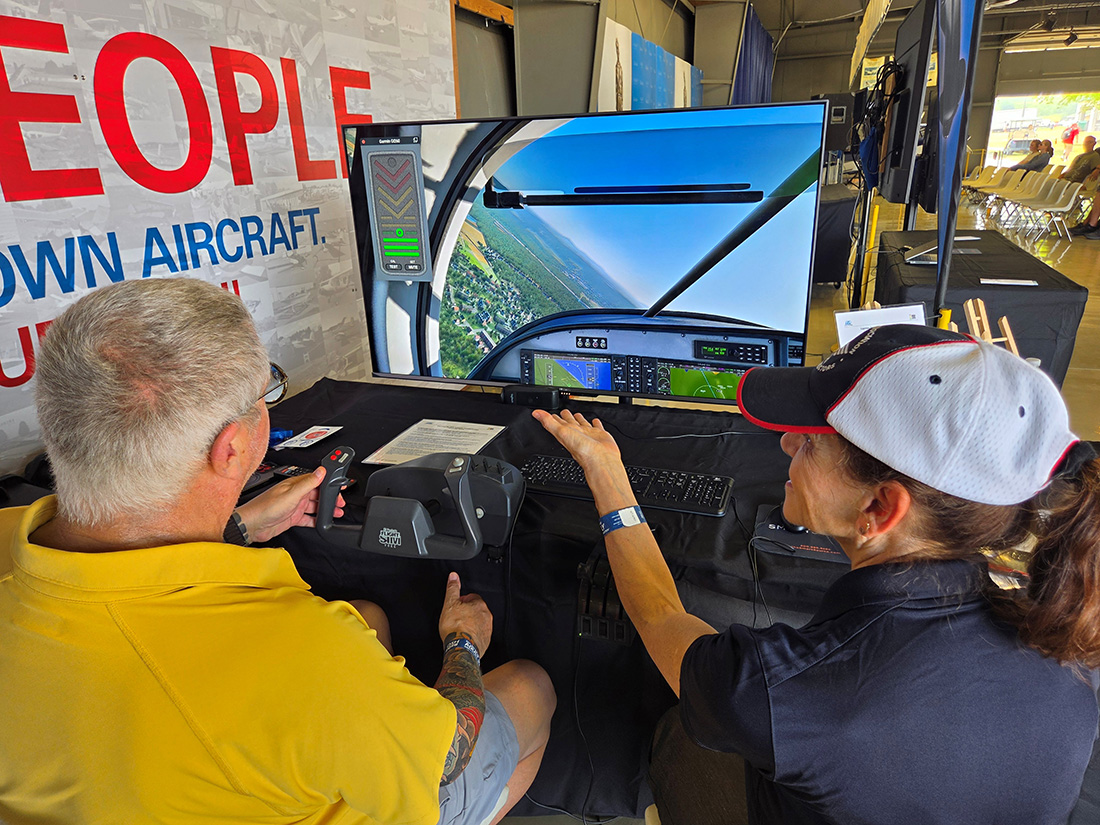
In an effort to raise awareness of the value of angle of attack indicators (AOAs), AirVenture 2026 attendees can fly an AOA simulator in the Homebuilders Hangar. The simulator is being made possible by a collaboration between EAA’s Safety Committee/AOA Workgroup and Laminar Research, developer of X-Plane.
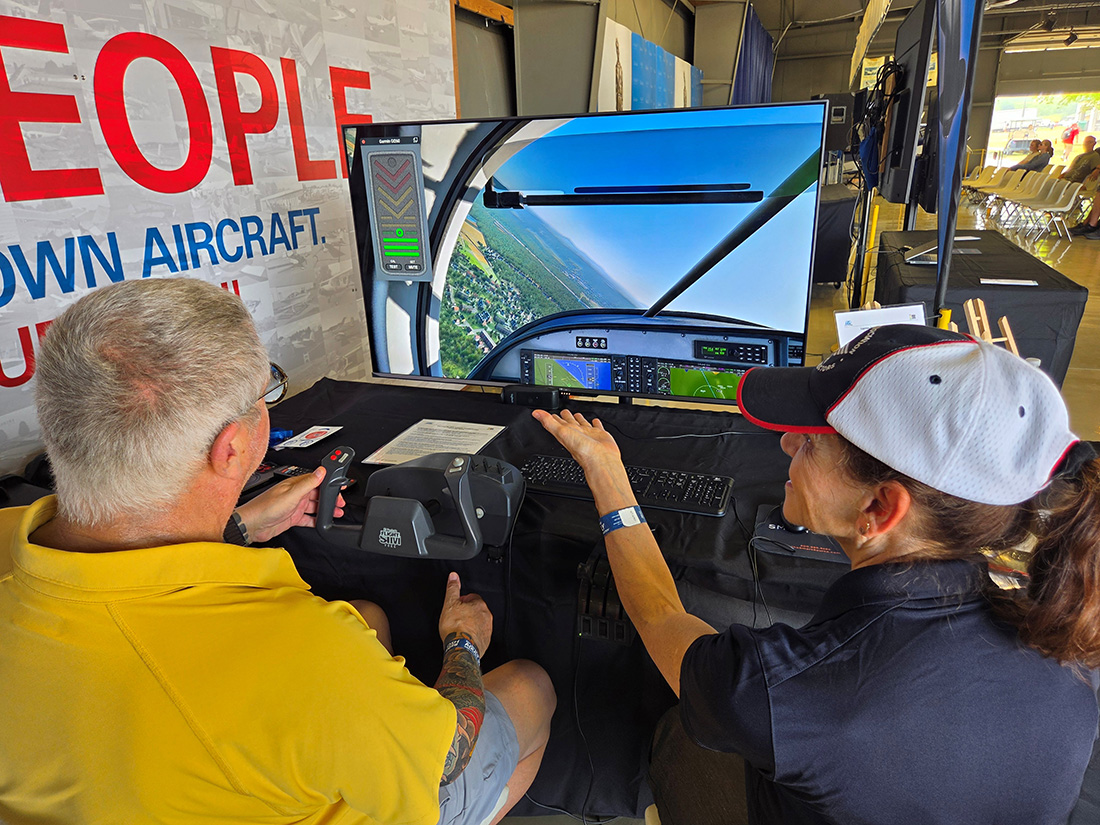
In an effort to raise awareness of the value of angle of attack indicators (AOAs), AirVenture 2026 attendees can fly an AOA simulator in the Homebuilders Hangar. The simulator is being made possible by a collaboration between EAA’s Safety Committee/AOA Workgroup and Laminar Research, developer of X-Plane.
“The Safety Committee has recognized that installing an AOA indicator is a top safety enhancement and is an opportunity to reduce accident rates of experimental aircraft even further,” said AOA Workgroup member and decades-long EAA volunteer Sue Gardner.
EAA worked with Ben Myburgh at Laminar Research on the simulator. “EAA reached out and said, ‘Hey, we want to teach people AOAs,’” Ben said. “And so we took an internal developer team and we said, ‘Alright, let’s put together this project.’”
For the past three years, pilots have also been able to receive AOA training on Redbird simulators at the Pilot Proficiency Center. “We were actually amazed at how many would say at their very first introduction to an AOA indicator, ‘Where do I get one of these? I absolutely need this. This is a lifesaving technology,’” Sue said.
Another partner on AOA training has been the National Association of Flight Instructors (NAFI). “We determined a lot of pilots were not familiar with angle of attack indicators because it’s fairly new technology, and this also applies to many of our long-term and dedicated instructors who haven’t been introduced to AOA indicator use,” said NAFI Chair Karen Kalishek. “What we’re trying to do is also raise awareness in the instructional community because there’s the ripple effect. If the instructors learn the technology, and examiners as well, of course, then it’s going to start to embed itself and permeate throughout the entire community of general aviation.”
